E-29|Decision First, Justification Later
This page identifies three key logical failures in the psychiatric and related administrative records. The focus is not to reproduce the full report, but to show how later interventions, control measures, and deprivations were advanced despite insufficient evidence, incomplete procedure, or unproven conclusions.
This page identifies three core logical failures in the psychiatric and related administrative records. The point is not to repeat the entire report, but to show how later interventions and decisions were built on unverified assumptions.
This page shows how the relevant systems inserted conclusions first, despite lack of evidence, and then constructed the entire case narrative around those conclusions afterward.
Original Report Download
For transparency and verification, the full 34-page psychiatric evaluation report is provided below.
The complete original report is made available here so that readers can verify the underlying material directly.
⬇ Download Full 34-Page Evaluation Report (PDF)① The Fønix Assessment Was Ignored
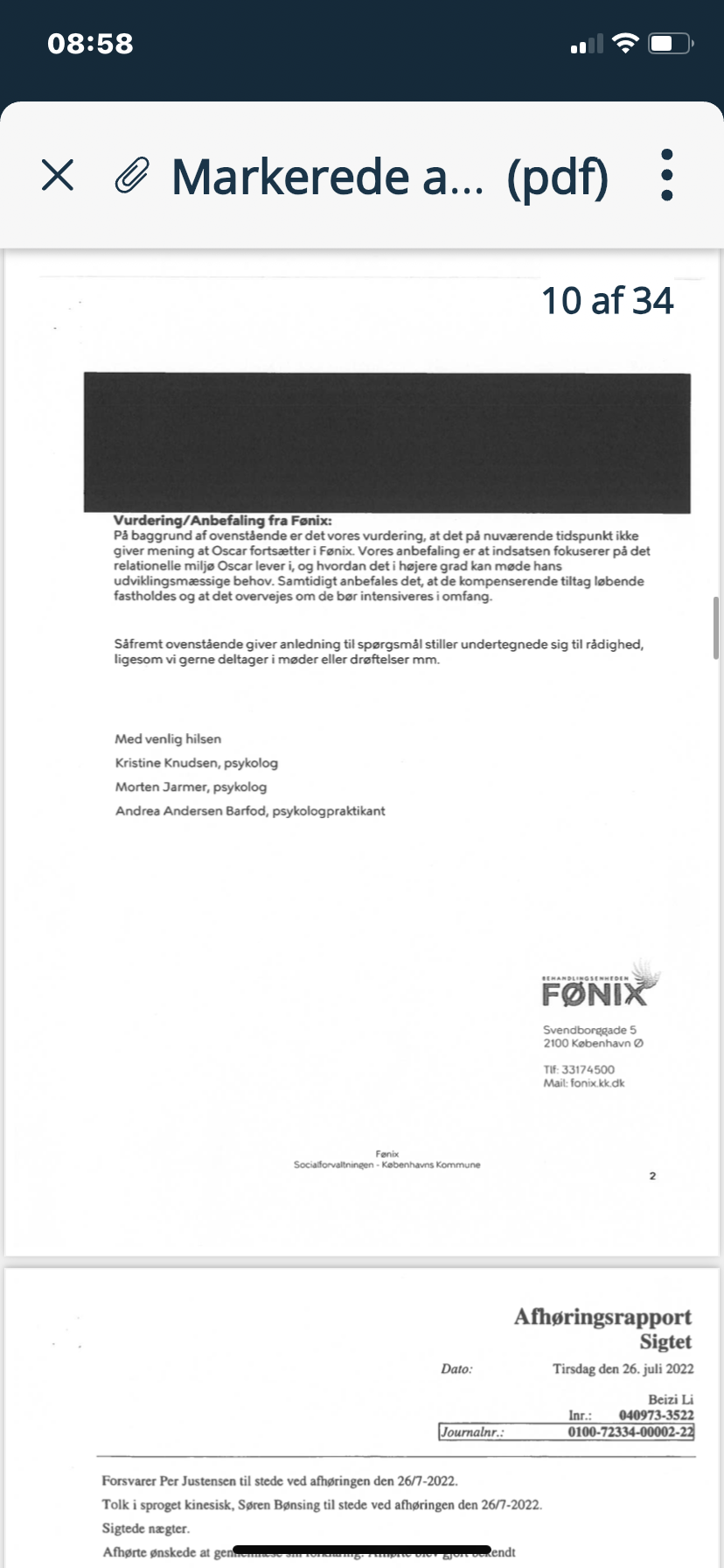
The file shows that Fønix clearly did not recommend continuing the process there. However, this conclusion did not lead the system to stop its progression. Instead, it was effectively bypassed, while later control and intervention continued.
The records show that Fønix did not recommend continuing the process there. Nevertheless, this conclusion was ignored in practice, and the later intervention track continued anyway.
② Mental State Was Directly Used to Justify Taking the Child
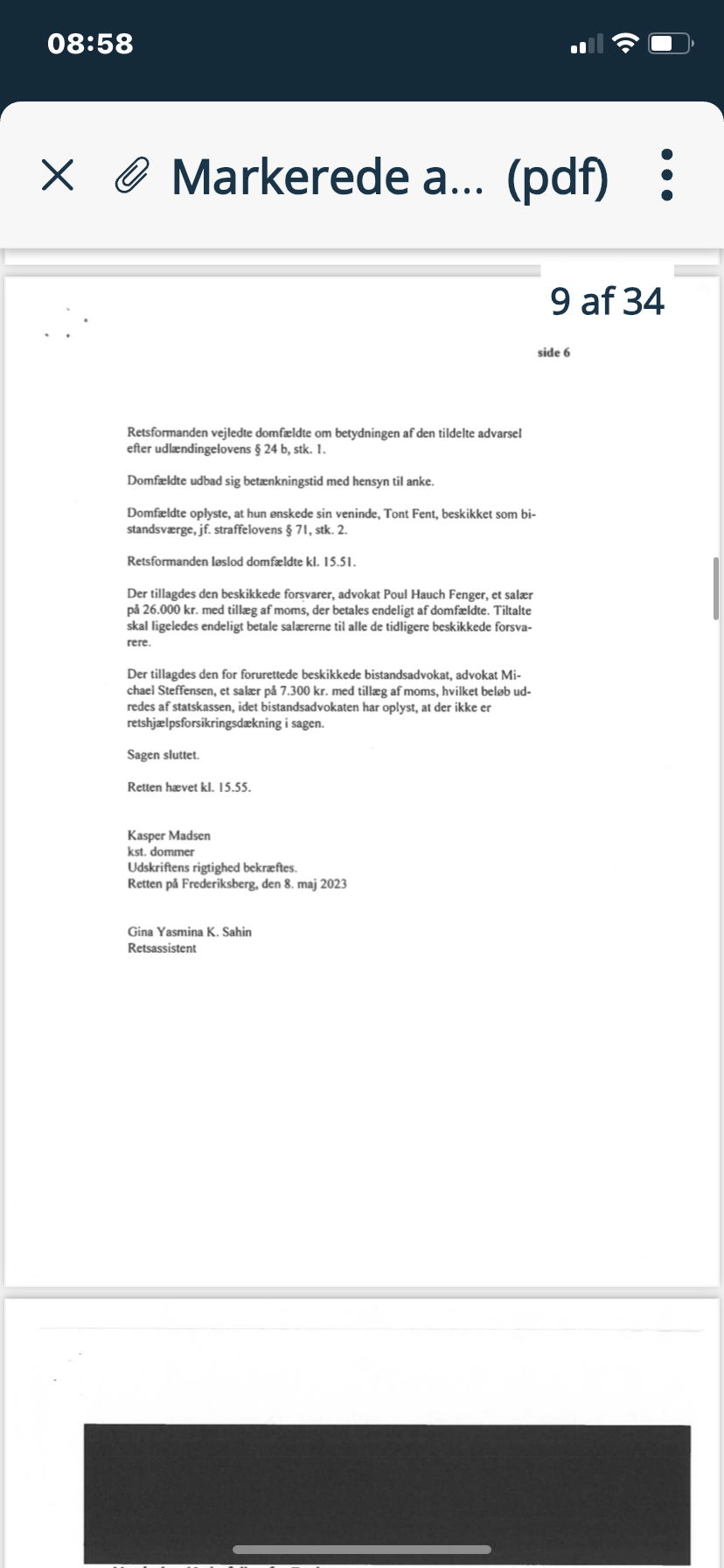
The report directly links so-called “mental state problems” to the conclusion that the mother was unfit to care for the child, yet it does not clearly present concrete behavioural evidence, verifiable risk, or an independent assessment process. This constitutes a clear logical leap.
The report links alleged mental state problems directly to the conclusion that the mother was not fit to care for the child, without clearly presenting concrete behavioural evidence, verifiable risk, or an independent assessment process.
③ “Sexual Abuse” Was Written as Established Fact Without Proof
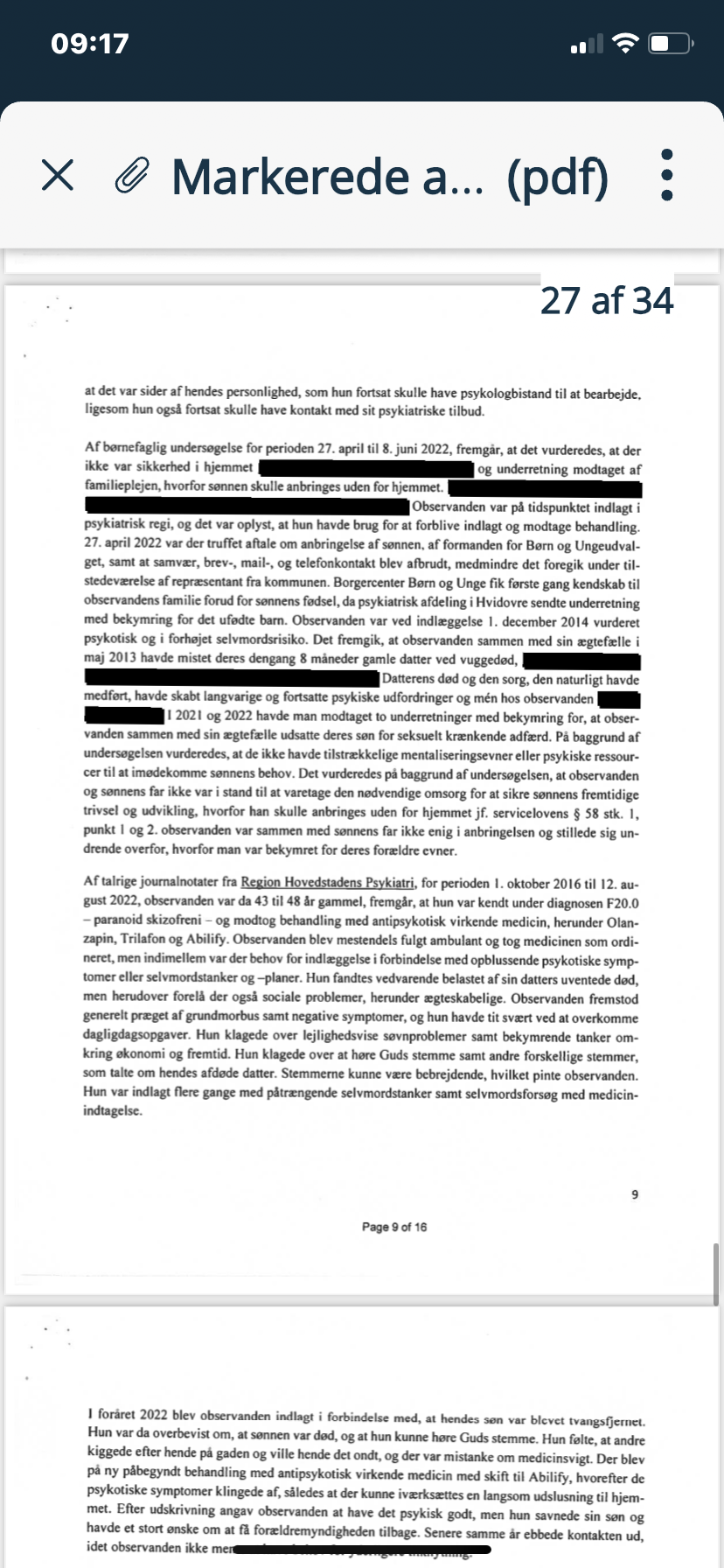
At this point, the relevant file does not present concrete sources, investigation findings, or judicial confirmation. Yet it already uses “the child had been sexually abused” as an established formulation. In other words, the conclusion had already been written into the system before it had actually been proven.
The record does not provide concrete sources, investigation findings, or judicial confirmation at this stage, yet it already presents “sexual abuse” as an established fact. The conclusion appears in the system before proof was completed.
Conclusion
Taken together, these three problems show that the relevant systems did not reach conclusions after completing a fair investigation. Instead, conclusions appear to have come first, while language, records, and interventions were arranged around them afterward.
This is not a matter of isolated wording errors. It reflects a structural bias running through both the assessment process and the later handling of the case.
The structural issues described on this page are further documented in the Police Evidence module, including criminal charge, restricted access to evidence, procedural delay, and controlled disclosure.
👉 Enter Police Evidence Module