E-29 先定罪,再找理由
本页提炼出精神科与相关系统文件中的三项关键逻辑错误。重点不在于重复整份报告,而在于指出:这些文件如何在证据不足、程序未完成或结论未被证明的情况下,直接推动了后续干预、控制与剥夺。
This page identifies three core logical failures in the psychiatric and related administrative records. The focus is not to reproduce the full report, but to show how later interventions and decisions were built on unverified assumptions.
本页展示:相关系统在缺乏证据的情况下,已先行写入结论,并以此反向构建整个案件叙述。
原始文件下载|Original Report Download
为保证透明性与可验证性,现提供完整 34 页精神评估报告下载。
For transparency and verification, the full 34-page psychiatric evaluation report is provided below.
⬇ 下载完整 34 页评估报告(PDF)① Fønix 评估结论被忽视
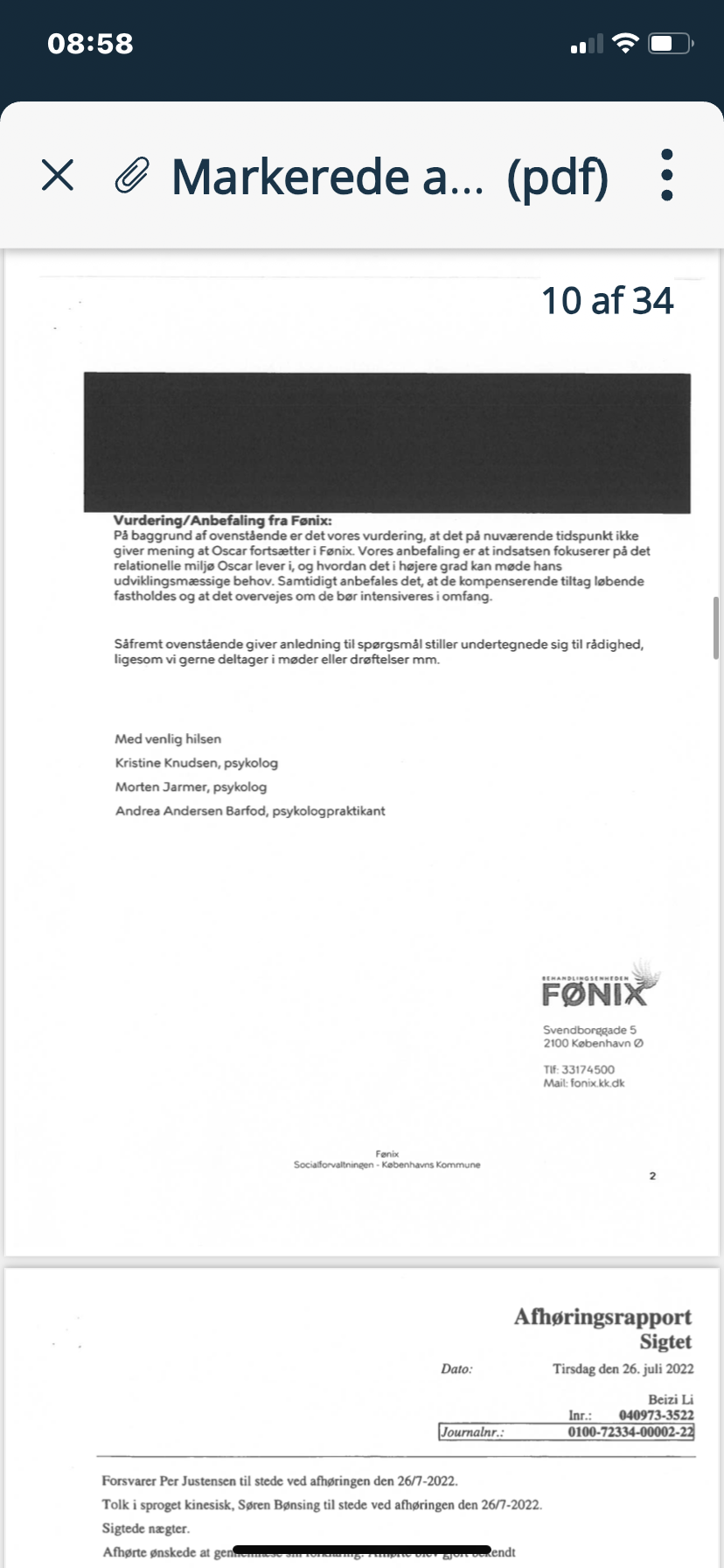
文件中显示,Fønix 已明确表示不建议继续在该机构进行后续过程。然而,这一结论并未导致系统停止推进,而是被直接绕过,后续控制与干预仍持续进行。
The records show that Fønix did not recommend continuing the process there. Nevertheless, this conclusion was effectively bypassed, while subsequent control measures continued.
② 精神状态被直接用于推导剥夺孩子
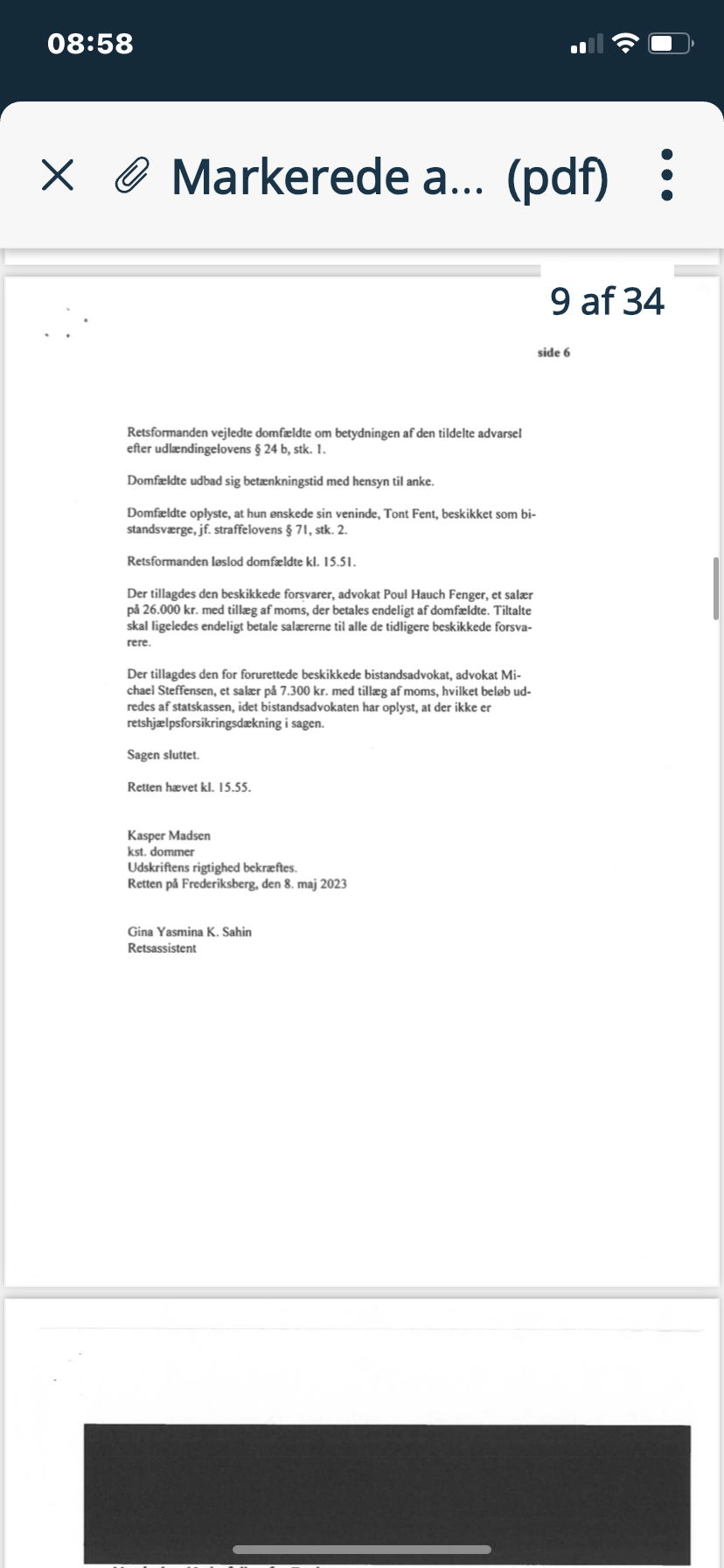
报告中将所谓“精神状态问题”直接与母亲不适合照顾孩子联系起来,却没有清楚列出具体行为证据、可验证风险或独立评估过程。这构成了明显的逻辑跳跃。
The report links alleged mental state problems directly to the conclusion that the mother was not fit to care for the child, without clearly presenting concrete behavioural evidence, verifiable risk, or an independent assessment process.
③ 在无证据情况下,将“性侵”写成既定事实
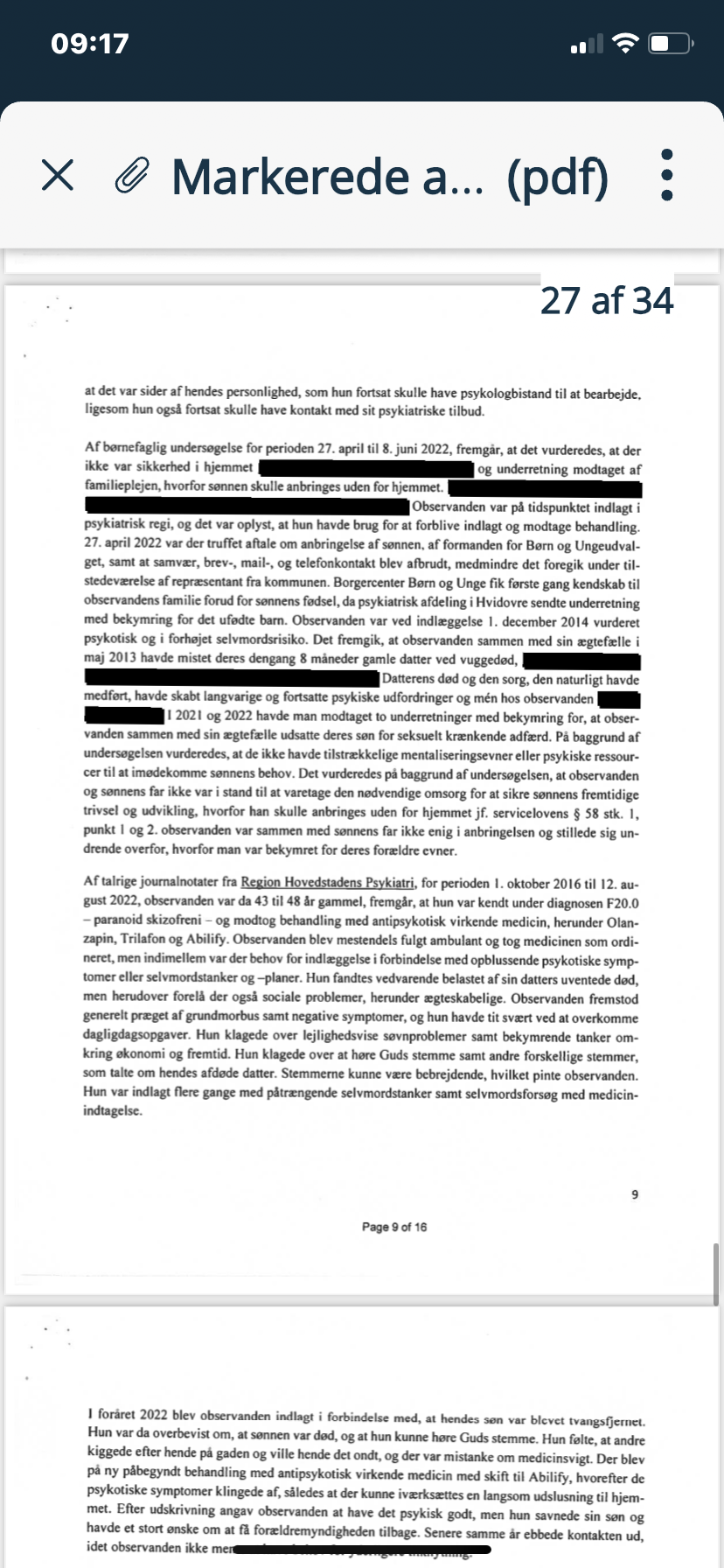
相关文件并未在该处列出具体来源、调查结论或司法确认,却直接使用“孩子曾遭受性侵”这一既定表达。也就是说,在没有完成证明之前,结论已经先被写进了系统。
The records do not provide concrete sources, investigation findings, or judicial confirmation at this point, yet they already present “sexual abuse” as an established fact. In other words, the conclusion was written into the system before it was actually proven.
结论|Conclusion
这三项问题共同显示:相关系统并非在完成调查后得出结论,而是在结论先行的前提下,反向组织语言、记录与干预。这不是单一用词失误,而是贯穿评估与处理流程的结构性偏差。
Taken together, these three problems show that the system did not arrive at conclusions after completing a fair investigation. Instead, conclusions appear to have come first, with language, records, and interventions arranged around them afterwards.